




Blog
Why Calédon Chooses Natural Farming: Understanding SPNF, Organic Farming, and the Power of Living Soil
Growing Food the Way Nature Intended
In recent years, consumers have become increasingly conscious about where their food comes from, how it is grown, and the impact farming practices have on both human health and the environment. Terms such as Organic Farming, Natural Farming, and SPNF (Subhash Palekar Natural Farming) are now widely discussed, but many people are still unclear about what sets them apart.
At Calédon, we believe that exceptional food begins beneath the surface—with healthy, living soil. Our farming practices are deeply inspired by the principles of Padma Shri Dr.Subhash Palekar’s Natural Farming philosophy, which focuses on restoring natural biological processes rather than relying on external inputs. We cultivate food in harmony with nature, creating produce that is rich in flavor, nutrient density, and ecological integrity.
The Philosophy Behind Subhash Palekar Natural Farming (SPNF)
Subhash Palekar Natural Farming is based on the belief that nature has its own self-sustaining systems. Instead of feeding plants directly through fertilizers, SPNF aims to create ideal conditions for soil microorganisms, earthworms, and natural biological cycles to nourish crops.
The central idea is simple:
Healthy soil creates healthy plants, and healthy plants produce healthy food.
Rather than viewing soil as an inert medium that requires constant supplementation, SPNF treats soil as a living ecosystem filled with billions of microorganisms working together to support plant growth.
SPNF vs Organic Farming: Understanding the Difference
While both systems seek to reduce chemical dependence and promote sustainable agriculture, their approaches differ significantly.
| Aspect | SPNF (Subhash Palekar Natural Farming) | Organic Farming |
| Core Philosophy | Build living soil ecosystems using local biological resources | Replace synthetic inputs with approved organic inputs |
| Fertility Management | Relies on microbial activity and natural nutrient cycling | Relies on compost, manure, vermicompost, and organic fertilizers |
| External Inputs | Minimal to near-zero external inputs | Organic inputs may still need to be purchased |
| Cost of Cultivation | Generally very low | Moderate to high depending on input requirements |
| Soil Health Approach | Stimulates natural biological processes | Improves fertility through added organic matter |
| Water Use | Reduced through Waaphasa principles | Depends on farm management practices |
| Role of Livestock | Indigenous cow plays a central role | Livestock beneficial but not essential |
While organic farming focuses on replacing synthetic products with organic alternatives, SPNF goes a step further by attempting to minimize dependence on external inputs altogether and harness nature’s own biological intelligence.
Why Living Soil Matters
Modern agriculture often focuses heavily on supplying crops with Nitrogen, Phosphorus, and Potassium (NPK). While these nutrients are essential, plants require a much broader range of minerals, trace elements, enzymes, and biological interactions to achieve their full potential.
A living soil ecosystem provides these naturally.
Healthy soils contain:
- Beneficial bacteria
- Mycorrhizal fungi
- Earthworms
- Actinomycetes
- Protozoa
- Organic carbon
Together, these organisms break down minerals, improve nutrient availability, build soil structure, and support resilient crop growth.
When plants grow in biologically active soils, they often develop:
- Richer flavors
- Better aroma
- Improved texture
- Enhanced nutritional quality
- Greater resilience to environmental stress
This is one of the primary reasons naturally farmed produce is often described as tasting more authentic and vibrant.
The Four Pillars of SPNF
Subhash Palekar’s farming system rests on four foundational practices that work together to build soil vitality.
1. Beejamrut – Healthy Seed Treatment
Beejamrut is a natural seed treatment prepared using cow dung, cow urine, lime, and local soil.
Benefits include:
- Protection against soil-borne diseases
- Improved seed germination
- Stronger early root development
2. Jeevamrut – Microbial Activation
Jeevamrut is often described as the heart of SPNF.
It is prepared using:
- Desi cow dung
- Desi cow urine
- Jaggery
- Pulse flour
- Local soil
Rather than acting as a fertilizer, Jeevamrut serves as a microbial catalyst that rapidly multiplies beneficial soil organisms.
These microbes help:
- Improve nutrient cycling
- Increase biological activity
- Support root development
- Enhance soil fertility naturally
3. Acchadana – Mulching
Mulching protects the soil from harsh environmental conditions while continuously feeding soil biology.
Benefits include:
- Reduced evaporation
- Improved moisture retention
- Enhanced organic matter
- Better temperature regulation
- Increased microbial activity
4. Waaphasa – Ideal Air-Water Balance
Waaphasa refers to maintaining the optimal balance of air and moisture within the soil.
Healthy roots require both oxygen and water.
By avoiding excessive irrigation, SPNF encourages stronger root systems, healthier microbial populations, and more efficient water use.
Why the Desi Cow Holds a Special Place in SPNF
One of the most distinctive aspects of Subhash Palekar’s philosophy is the emphasis on indigenous Indian cattle breeds.
According to SPNF principles, a single healthy desi cow can provide enough biological material to prepare microbial formulations for multiple acres of farmland.
Popular indigenous breeds include:
- Gir
- Sahiwal
- Tharparkar
- Red Sindhi
- Khillari
Cow dung and cow urine are used in preparing both Jeevamrut and Beejamrut because they contain diverse microbial communities that help activate biological processes in the soil.
While many agricultural experts acknowledge the value of cow-based microbial preparations, there remains scientific discussion regarding whether indigenous breeds possess unique advantages compared to other cattle. Regardless of breed, the broader principle remains the same: using biological resources to stimulate healthy soil ecosystems.
The cow, in SPNF, is not viewed as a fertilizer factory but as a catalyst for creating living soil.
Why Naturally Farmed Produce Often Tastes Better
Consumers frequently notice a difference in produce grown under biologically focused farming systems.
Several factors contribute to this:
Balanced Growth
Unlike crops pushed toward rapid growth through heavy fertilizer application, naturally grown plants often mature at a more balanced pace, allowing better flavor development.
Greater Nutrient Diversity
Healthy microbial ecosystems unlock a wider range of micronutrients and trace minerals that influence taste and aroma.
Higher Dry Matter Content
Naturally grown fruits and vegetables often contain less excess water and a higher concentration of sugars and flavor compounds.
Natural Ripening
When produce is harvested at physiological maturity and allowed to ripen naturally, it develops:
- Better sweetness
- Fuller aroma
- Richer color
- More complex flavor profiles
The result is food that more accurately reflects the characteristics of its variety, season, and terroir.
The Calédon Commitment
At Calédon, Natural Farming is not simply a cultivation method—it is the foundation of our philosophy.
We follow principles inspired by Subhash Palekar Natural Farming because they align closely with our belief that the healthiest food comes from the healthiest soil.
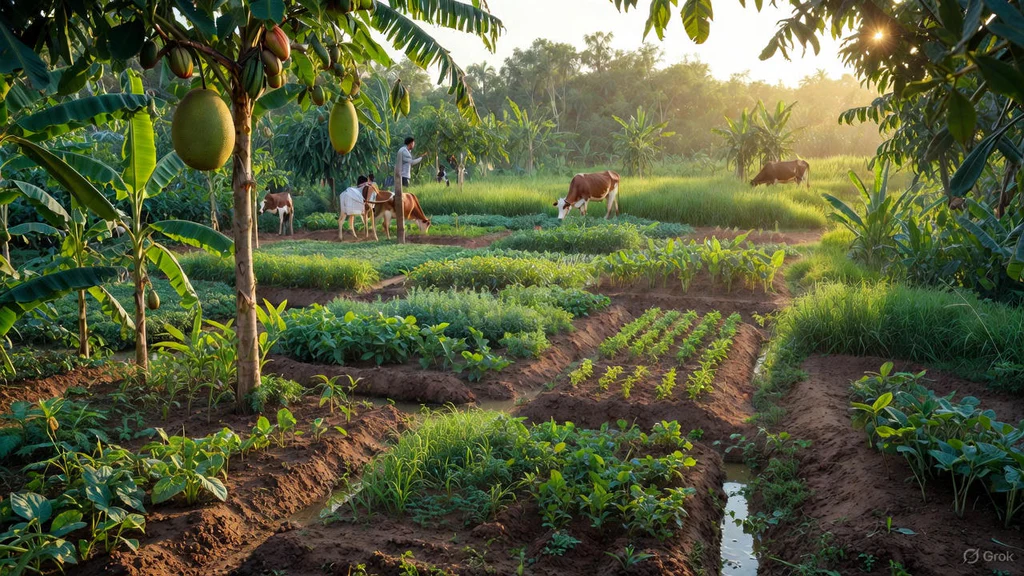
Our focus is always on maintaining soil in its most biologically active and balanced condition. By encouraging biodiversity, supporting beneficial microorganisms, minimizing external inputs, and working with natural ecological cycles, we create conditions where crops can thrive naturally.
Every farming decision we make is guided by three core values:
Soil First
Healthy soil is the source of healthy food. We invest in building biological activity and long-term soil vitality.
Harmony with Nature
Our farming practices are designed to work with natural systems rather than against them, respecting ecological balance and biodiversity.
Ethical Stewardship
We believe agriculture should nourish people while protecting the land for future generations.
Food With Character
At Calédon, we are committed to producing food that reflects the true potential of nature.
By nurturing living soils, encouraging natural biological processes, and embracing sustainable farming principles, we cultivate produce that is flavorful, nutritious, and authentic.
Because when the soil is alive, the food tells the story.
Calédon — Rooted in Living Soil. Grown by Nature. Crafted for Taste.
Oil the way it should be:
Oil the way it should be: Always fresh, never blended,
Always fresh, never blended,


₹420.00 – ₹1,280.00Price range: ₹420.00 through ₹1,280.00
Select options
This product has multiple variants. The options may be chosen on the product page


₹420.00 – ₹1,260.00Price range: ₹420.00 through ₹1,260.00
Select options
This product has multiple variants. The options may be chosen on the product page


₹420.00 – ₹1,240.00Price range: ₹420.00 through ₹1,240.00
Select options
This product has multiple variants. The options may be chosen on the product page